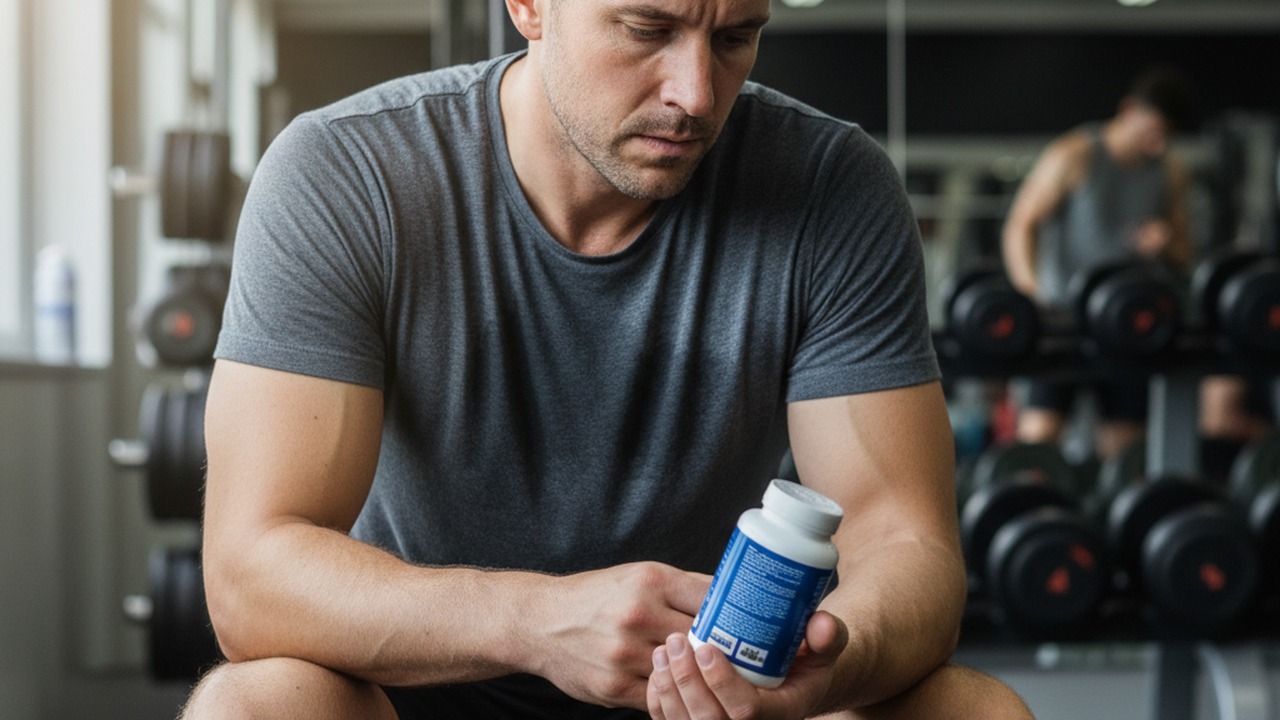
A narrative review published in Nutr Health this September pulled apart the ashwagandha research on athletes, and it found the evidence splits sharply down the middle. The stress and recovery data hold up. The strength and performance claims mostly don’t.
That distinction matters because ashwagandha is now marketed almost interchangeably as a stress adaptogen and a performance enhancer, often on the same label. The review set out to separate the two claims by tracing them back to the actual trials behind them, rather than the marketing copy built on top of those trials.
What the review actually looked at
The authors worked through the existing human trials on Withania somnifera, the botanical name for ashwagandha, focusing on outcomes relevant to athletes: cortisol, strength, VO2 max, muscle recovery markers, and sleep. Narrative reviews don’t run new statistics the way a meta-analysis does, but they’re useful for spotting where a field’s evidence is genuinely consistent and where it’s being stretched to fit a marketing story.
Here, the pattern was clear. Cortisol reduction showed up reliably across trials. Direct performance gains did not.
The cortisol effect is the strongest finding
Ashwagandha’s best-documented effect is lowering circulating cortisol, and that’s been true for over a decade. In a widely cited 2012 trial published in the Indian Journal of Psychological Medicine, adults with chronic stress who took a high-concentration root extract saw serum cortisol drop by roughly 28 percent over 60 days, compared with a slight increase in the placebo group.
For athletes, that matters less as a stress-relief benefit and more as a training-load one. Chronically elevated cortisol is associated with poor sleep, blunted testosterone response, and slower tissue repair, all of which interfere with adaptation to hard training blocks. The new review treats this cortisol pathway as the most plausible mechanism behind whatever recovery benefit ashwagandha does offer, more than any direct action on muscle tissue itself.
Strength and endurance gains are inconsistent
The strength data is where the review gets more skeptical. A 2015 randomized trial in the Journal of the International Society of Sports Nutrition, led by researcher Sachin Wankhede, found that resistance-trained men taking ashwagandha for eight weeks gained more bench press strength and muscle size than those on placebo. It remains the study most often cited to justify ashwagandha as a muscle-building supplement, appearing on countless product pages.
But a single positive trial in trained men isn’t the same as a reproducible effect across the field. A 2021 Bayesian meta-analysis in the Journal of Functional Morphology and Kinesiology pooled the available strength and cardiorespiratory trials and found only a small-to-moderate improvement in VO2 max, with no clear, consistent effect on strength once the full body of evidence was combined.
An earlier trial in the Journal of Ayurveda and Integrative Medicine reported improved VO2 max in healthy adults after eight weeks of supplementation, which lines up with the endurance signal. Put together, the honest read is that ashwagandha’s aerobic capacity effect is modest but plausible, while its strength effect rests on thinner ground than most marketing suggests.
Recovery markers show more promise than performance numbers
Where the new review is more favorable is on subjective and physiological recovery markers rather than raw output. Trials measuring muscle damage, perceived recovery, and sleep quality after exercise tend to show more consistent improvement than trials measuring one-rep max or sprint times.
That fits with the cortisol mechanism. If ashwagandha lowers the stress hormone response to training, athletes might feel more recovered and sleep better without necessarily lifting more weight or running faster within a given eight-week study window.
For anyone stacking supplements around a training block, that recovery angle sits closer to what other natural recovery supplements for athletes are typically used for than to a stimulant or a direct ergogenic aid.
Dose and extract type change the picture
Nearly every positive trial in the review used a standardized root extract, most often KSM-66 or Sensoril, dosed between 300 and 600 milligrams daily. Studies using lower doses or unstandardized leaf extracts showed weaker or null results by comparison.
That’s a meaningful detail for anyone buying ashwagandha off a shelf, because extract type isn’t always disclosed clearly on consumer labels. A product listing a vague ashwagandha extract at 200 milligrams is not chemically equivalent to the standardized root extracts used in the trials the review leaned on.
Athletes comparing this to more established options like a creatine protocol, where dosing and effect size are far better established, will notice ashwagandha’s evidence base is younger and less standardized across brands.
What the safety data shows
The trials reviewed generally reported ashwagandha as well tolerated at studied doses, with mild gastrointestinal upset the most common complaint. The review also flags that most trials run eight to twelve weeks, so longer-term safety data in athletes taking it year-round is considerably thinner than the short-term picture suggests.
There’s also a hormonal wrinkle worth noting. Because ashwagandha appears to influence cortisol and, in some trials, testosterone modestly, people on hormone-sensitive medications or with thyroid conditions are advised in the review to check with a physician before adding it to a training regimen.
The takeaway for athletes
Ashwagandha isn’t a performance enhancer in the way creatine or caffeine are, and this review makes that distinction explicit rather than blurring it into one adaptogenic pitch. What it appears to do, with reasonably consistent evidence, is lower the stress hormone load that comes with hard training, which can translate into better sleep and subjective recovery.
Whether that indirectly shows up as better numbers in the gym depends on how much cortisol was holding an individual athlete back in the first place. For someone training under high life stress, that pathway might matter a great deal. For someone whose training is already well recovered and well slept, the review suggests there’s little reason to expect a measurable performance jump from the bottle.