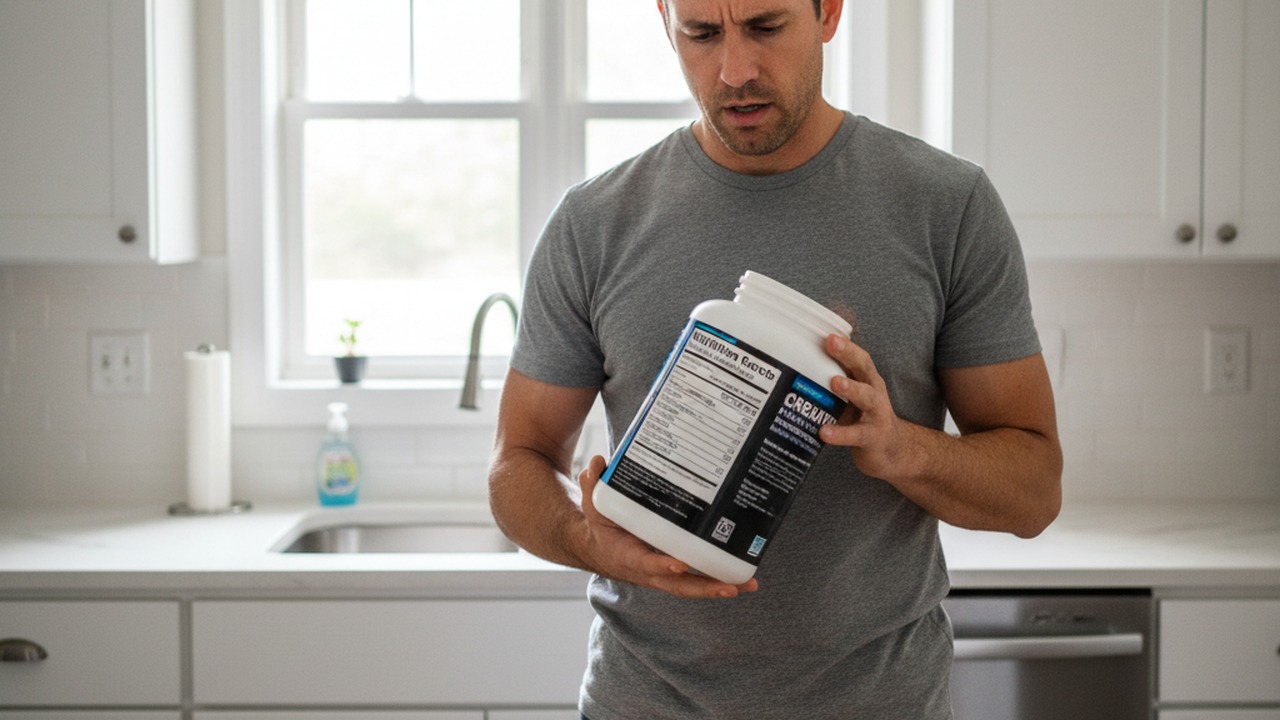
Nearly one in three regular creatine users in a new survey could not correctly identify the maintenance dose backed by decades of research. That gap sits at the center of a large cross-sectional study published in the Journal of the International Society of Sports Nutrition, which surveyed real-world creatine users about what they take, why they take it, and what they actually understand about it.
The findings complicate a supplement often treated as settled science. Creatine monohydrate is among the most studied compounds in sports nutrition, with a safety and efficacy record stretching back more than three decades. Yet the people taking it every day, according to this study, are often working from outdated rules, internet folklore, or no clear protocol at all.
A supplement with surprisingly little user education behind it
The researchers built their dataset from a large pool of self-reported creatine users, capturing dosing habits, perceived side effects, and sources of information. Respondents spanned recreational lifters, competitive athletes, and a growing group of older adults using creatine for reasons unrelated to the gym.
That breadth is part of the point. Creatine has moved well beyond bodybuilding forums, and the study’s authors argue that information quality has not kept pace with the supplement’s expanding user base.
A meaningful share of respondents reported sourcing their dosing knowledge from social media influencers or supplement brand marketing rather than clinical guidelines or a physician. The study ties this to inconsistent dosing patterns across the sample, with intake amounts that varied far more than the research literature would predict.
Some respondents reported taking a fraction of a gram per day, assuming more frequent small doses were equivalent to the clinically studied amount, while others reported doses several times higher than anything shown to add benefit. The sample also skewed toward newer product formats, with a notable share of users taking gummies, flavored drink blends, or capsules rather than plain monohydrate powder.
Those formats often deliver smaller and less consistent doses per serving, which the authors flag as another quiet contributor to the dosing confusion they measured.
The loading phase myth still will not die
One of the most persistent misconceptions in the survey involved loading protocols. Early creatine research used a short loading phase, around 20 grams per day split into four doses for five to seven days, to saturate muscle stores quickly before dropping to a lower maintenance dose.
That protocol was never a requirement. A steady 3 to 5 gram daily dose saturates muscle creatine stores just as completely, it simply takes three to four weeks instead of one.
Despite this being established for years, the survey found many users still believe loading is necessary, and some reported cycling on and off creatine in ways with no grounding in the physiology of how muscle creatine stores actually work. Richard Kreider, director of the Exercise and Sport Nutrition Lab at Texas A&M University and a long-time creatine researcher, has previously noted that muscle creatine stores remain elevated for weeks after stopping supplementation, which undercuts the logic behind cycling altogether.
The new survey data suggests that message has not reached much of the public taking the supplement.
Kidney and liver fears persist despite the evidence
Safety misconceptions showed up just as often as dosing confusion. A notable portion of respondents expressed concern that creatine damages the kidneys or liver in healthy users, a claim that has circulated for years despite not holding up in controlled research.
Multiple long-term studies have found no evidence of kidney or liver harm in healthy individuals using standard doses, even over periods of several years. Darren Candow, a creatine researcher at the University of Regina who has studied the compound extensively in aging and clinical populations, has pointed out that the kidney concern largely traces back to older case reports involving people who already had impaired kidney function, not healthy supplement users.
The authors note that this kind of fear, even when unfounded, has real consequences. Users who believe a supplement is risky are more likely to use it inconsistently, at the wrong dose, or stop altogether before seeing a benefit.
That hesitancy shows up directly in the survey’s adherence data, where self-doubt about safety correlated with gaps in daily use.
Why non-athletes are suddenly interested in creatine
Part of what makes this survey notable is timing. Interest in creatine has surged recently among people who are not athletes at all, driven largely by a wave of newer research into its effects on the brain.
Small trials have found that creatine supplementation may support cognitive performance under conditions of sleep deprivation or mental fatigue, and some work has explored its role in mood and recovery from brain injury. That research is still early compared to the decades of data on muscle performance, but it has clearly reshaped who is walking into a supplement aisle looking for creatine.
The survey’s authors suggest this shift helps explain some of the knowledge gaps they found. A lifter who has read a decade of bodybuilding forums has had more exposure to dosing norms than someone who started taking creatine this year because of a headline about brain fog, and the two groups are rarely reading the same sources.
What accurate use actually looks like
The research literature on creatine dosing is not complicated, which makes the survey’s findings more striking. A daily dose of 3 to 5 grams of creatine monohydrate, taken consistently, is sufficient to saturate muscle stores for most adults regardless of body size differences within a normal range.
Timing relative to workouts appears to matter far less than total daily consistency, according to the broader research record on creatine pharmacokinetics. Cycling off the supplement provides no established benefit and simply allows muscle creatine levels to decline before a user restarts the saturation process from a lower baseline.
For readers looking to separate evidence from habit, Athletic Insight’s creatine guide breaks down dosing, timing, and form in more detail.
The bigger pattern behind the numbers
What this study captures is not really a story about creatine specifically. It is a story about how supplement knowledge spreads in an environment where marketing, social media, and genuine research compete for the same attention.
Creatine happens to be one of the best-studied compounds in the field, which makes it a useful test case. If users of one of the most heavily researched supplements in sports nutrition still carry this much confusion about basic dosing and safety, the gap is likely wider for less-studied products with far thinner evidence bases.
The researchers frame their findings as a call for clearer public-facing education, not a knock against creatine itself. The compound’s safety and performance record remains intact.
What is missing, the data suggests, is a reliable bridge between that research and the people actually standing in front of a supplement shelf.