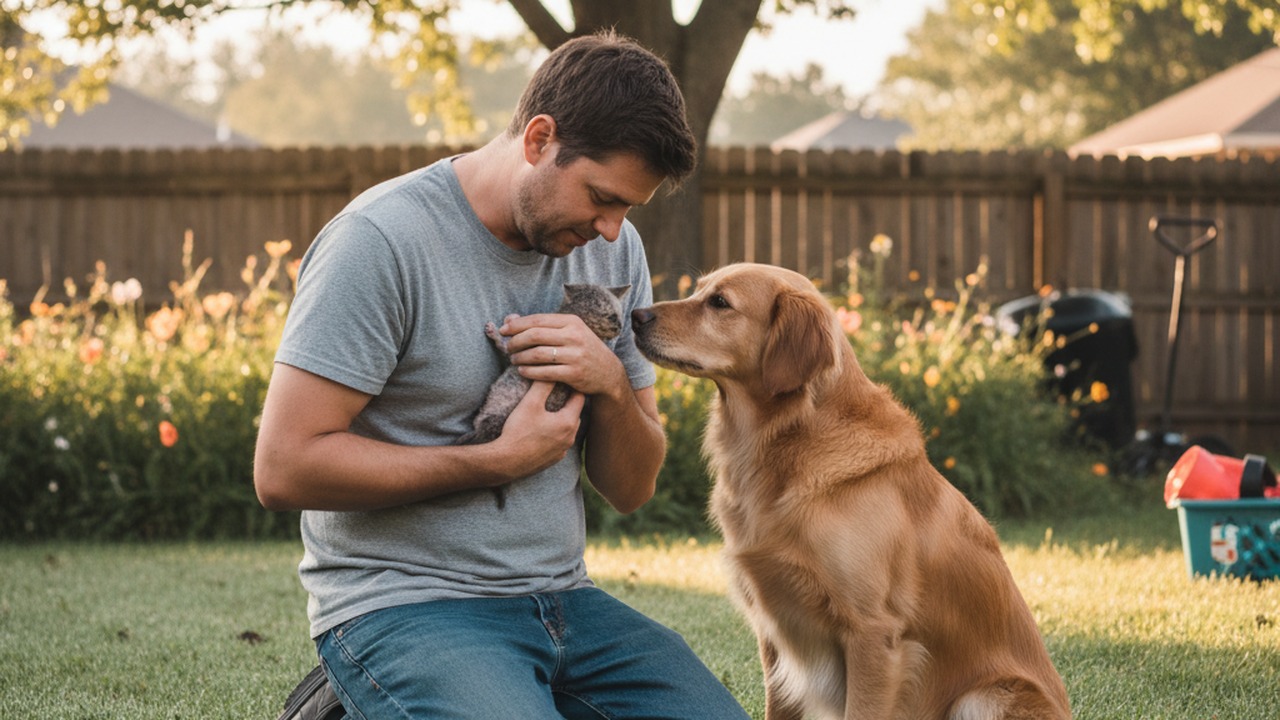
He thought it was garbage. His dog thought otherwise.
A Reddit user in the r/CatDistributionSystem community described a routine morning walk that ended with a six-week-old kitten in the vet’s office: his dog stopped to sniff what looked like trash in a stranger’s yard, and it turned out to be a barely breathing, dehydrated kitten with soot-black smudges around its nose and mouth. The story is not unusual. It is, in fact, common enough that the internet has a name for it.
What Is the “Cat Distribution System”?
The phrase started as an internet joke and has become genuine shorthand among rescuers and veterinarians for a real phenomenon: stray and feral cats produce far more kittens than shelters can absorb, and a striking number of those kittens end up “assigned” to whichever human happens to be nearby when they need one most.
It is not random luck. Community cat populations cluster around food sources, sheds, and quiet yards, and un-spayed females can produce two to three litters a year. When a litter is abandoned, orphaned, or simply too weak to keep up, the kittens left behind tend to surface in places humans and their dogs already walk.
Why Six Weeks Is a Dangerous Age to Be Alone
A kitten’s first eight weeks are unforgiving. At six weeks, a kitten is fully weaned or close to it, mobile enough to wander from a nest, and still too small to regulate body temperature or fend off dehydration on its own.
Mikel Delgado, a certified cat behavior consultant who has written extensively on kitten development, notes that this is also the tail end of the primary socialization window, the roughly two-to-seven-week stretch during which kittens learn whether humans, dogs, and other animals are safe. A kitten separated from its mother mid-window is vulnerable physically and behaviorally at the same time.
The black residue described around this kitten’s nose and mouth is a detail vets take seriously. It can indicate exposure to soot, mold, or debris in a hiding spot such as a chimney flue, engine bay, or storm drain, all common places distressed kittens retreat to when they are too weak to keep moving.
Reading Dehydration and Lethargy in a Kitten
The vet’s diagnosis in this case, dehydration with otherwise normal vitals, is the most common finding in kittens brought in after being found outdoors. Veterinarians typically check for it with a simple skin-tent test: gently lifting the loose skin between the shoulder blades and watching how quickly it snaps back.
In a well-hydrated kitten, the skin returns to place almost instantly. In a dehydrated one, it stays tented for a second or more. Sunken eyes, dry or tacky gums, and a single weak vocalization rather than persistent crying, exactly what this kitten did on the walk home, are consistent with moderate fluid loss rather than a more serious underlying illness.
Lethargy followed by a sudden burst of activity once rehydrated, as this kitten showed, is a good prognostic sign. It suggests the nervous system and organ function were never critically compromised, just running on empty.
Why He Won’t Eat or Drink Yet
New owners are often more alarmed by a kitten’s refusal to eat than they are by almost anything else, and it is usually the least dangerous symptom in the first 24 to 48 hours. Stress suppresses appetite in cats of every age, and a kitten who has just been separated from its mother, handled by strangers, examined at a clinic, and dropped into an unfamiliar home with three resident cats is under about as much stress as a small animal can experience.
The American Association of Feline Practitioners’ kitten care guidelines note that short-term appetite loss tied to relocation stress typically resolves within a day or two once the kitten feels secure, provided hydration is being managed separately, as it was here through veterinary fluids. What matters in the interim is offering food consistently, in a quiet low-traffic spot, without forcing it.
Warming wet food slightly, so it releases more scent, is a common trick vets recommend for stress-suppressed kittens, since smell drives feeding behavior in cats far more than sight does. If a kitten goes more than 24 hours without any interest in food or water despite this, that crosses from normal stress response into a reason to call the vet back.
Introducing a New Kitten to Resident Cats and Dogs
Bringing a six-week-old kitten into a home with three established cats is its own project, separate from the medical recovery. Cat behaviorists generally recommend a slow, scent-first introduction: keeping the newcomer in a separate room for several days with its own litter, food, and bedding, and swapping blankets between the kitten and resident cats so each learns the other’s smell before any face-to-face meeting happens.
Rushing this step is the single most common reason introductions fail long-term, not because the kitten is aggressive, but because resident cats read an unannounced newcomer as a territorial threat. A kitten this young is also not yet fully vaccinated, which is a separate reason vets recommend keeping it isolated from other cats until a full health workup, including screening for common feline viruses, is complete.
The dog that found him is, ironically, often the easier introduction. Many dogs that show gentle interest in a kitten during the initial discovery, sniffing rather than chasing, tend to default to a protective rather than predatory posture once the kitten becomes a permanent resident, though supervised introductions are still the standard advice.
When a Found Kitten Needs a Vet Immediately
Not every kitten found outdoors is this fortunate. Veterinarians point to a short list of signs that separate a dehydrated-but-stable kitten from one in genuine crisis: a body that feels cold to the touch, gums that are pale, blue, or white rather than pink, labored or open-mouth breathing, or complete unresponsiveness to touch and sound.
Any of those warrants an emergency visit rather than a scheduled appointment. A kitten that is merely quiet, limp, and unbothered by handling, as this one was, is far more likely to be dealing with straightforward dehydration and stress than something acute.
The general rule rescuers use is to treat any kitten under eight weeks found alone, especially one that looks freshly abandoned rather than feral-raised, as a same-day vet visit regardless of how alert it seems. Underlying issues like hypoglycemia and hypothermia can look deceptively mild right up until they are not.
The System Worked, This Time
What reads online as a heartwarming coincidence, a dog randomly finding a kitten mistaken for trash, is really the predictable output of a widespread stray cat population intersecting with a very good nose. The internet’s joke about a “distribution system” carries a real truth: these encounters happen constantly, and outcomes depend entirely on what the person on the other end of the leash does next.
This kitten got lucky with the right dog, the right walk, and an owner who checked twice before walking past what looked like garbage.