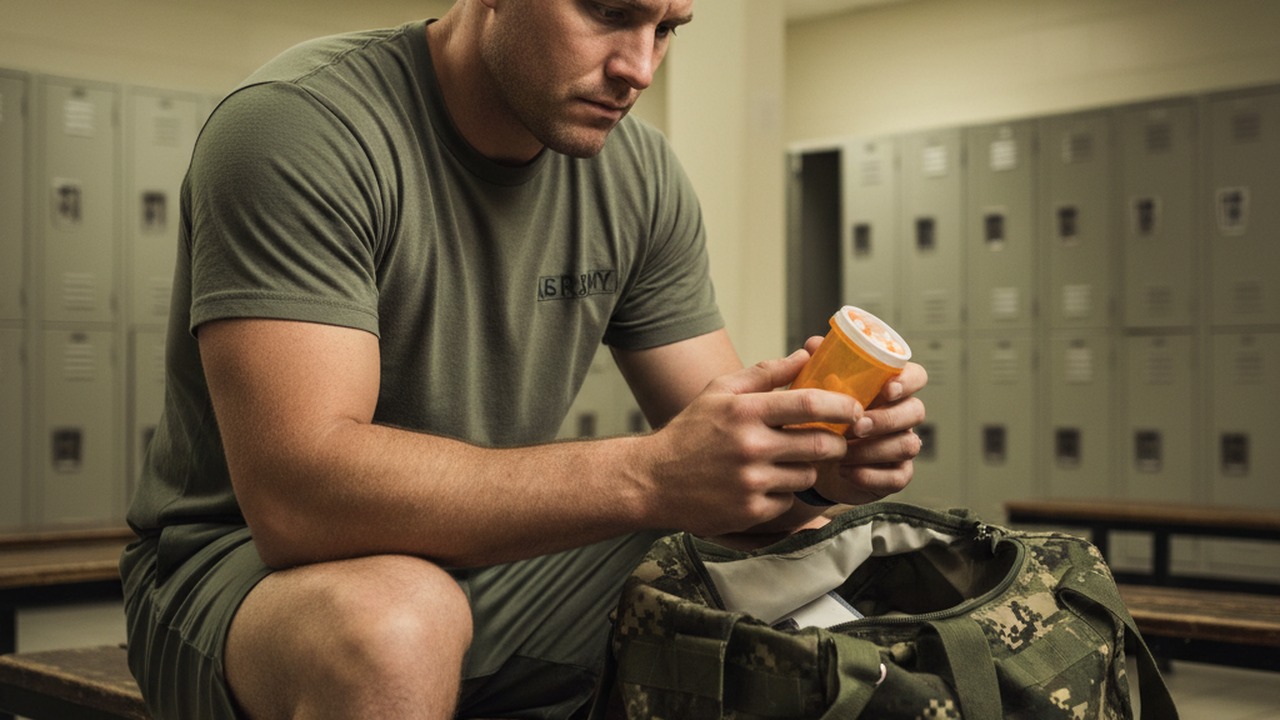
The Pentagon has quietly become one of the largest testosterone prescribers in the country, and Defense Secretary Pete Hegseth has decided that needs oversight. According to Newsweek, new Department of Defense rules will require medical review and command accountability for service members using prescribed testosterone, tying the drug directly to the military’s ongoing crackdown on fitness standards and deployability.
What the new rules actually target
The policy shift, as Newsweek reported, focuses less on banning testosterone replacement therapy outright and more on closing the gap between who gets prescribed it and who is actually diagnosed with a medical need for it. Commanders and medical officers are being put on the hook for documenting that a service member’s low testosterone is a genuine clinical finding, not a performance shortcut dressed up in a diagnosis.
That distinction matters because TRT sits in an unusual gray zone. It is a legitimate, FDA-approved treatment for clinically low testosterone, known as hypogonadism, but it is also chemically related to the anabolic steroids banned in nearly every competitive sport, including military physical fitness testing.
Why testosterone prescriptions exploded across the ranks
TRT use in the United States has climbed for two decades, driven by direct-to-consumer low-T clinics, telehealth prescribers, and a culture that increasingly treats normal-range testosterone as something to optimize rather than a diagnosis to rule out. The military is not immune to that trend, and its population skews toward exactly the demographic most targeted by low-T marketing: men in their 30s and 40s under heavy physical and psychological stress.
Chronic sleep deprivation, high cortisol from combat training, traumatic brain injury, and body composition changes can all suppress natural testosterone production, which creates a genuinely large pool of service members who may qualify for treatment. The problem the Pentagon is trying to solve is separating that legitimate pool from troops using softer diagnostic criteria to access a drug that also happens to build muscle and speed recovery.
What the actual research says about TRT and performance
The clearest data on what testosterone therapy does for aging or borderline-low men comes from the Testosterone Trials, a set of coordinated studies published in the New England Journal of Medicine in 2016. Researchers led by Peter Snyder at the University of Pennsylvania found that a year of treatment modestly improved sexual function, mood, and bone density in men over 65 with unambiguously low testosterone, but the effect on physical function and walking speed was small and inconsistent.
That is a meaningfully different picture than the one implied by low-T marketing, which frames testosterone as a near-universal fix for fatigue, muscle loss, and flagging performance. In healthy men with testosterone levels in the low-normal range, the evidence for meaningful strength or endurance gains from supplementation is thin, which is exactly why sports and military bodies restrict its use as a performance enhancer in the first place.
The safety question the Pentagon cannot ignore
For years, testosterone therapy carried a cardiovascular warning cloud, based largely on observational studies that could not prove cause and effect. That question got a more definitive answer in 2023, when the TRAVERSE trial, published in the New England Journal of Medicine, followed more than 5,000 men for an average of 33 months.
The trial, co-led by endocrinologist Shalender Bhasin at Brigham and Women’s Hospital and Harvard Medical School, found no significant increase in major cardiac events, heart attacks, or stroke among men randomized to testosterone gel versus placebo. It did find a higher rate of atrial fibrillation, acute kidney injury, and pulmonary embolism in the testosterone group, a reminder that safe on average is not the same as risk-free for everyone.
For a military population that already carries elevated cardiovascular strain from deployments, sleep loss, and physical trauma, that nuance is exactly why the Pentagon wants a documented medical case file behind every prescription rather than a same-day telehealth appointment.
Who is actually on the hook
Under the framework Newsweek described, accountability runs in two directions. Service members prescribed testosterone outside of a documented medical diagnosis could face review of their fitness or readiness status, while the medical providers and command structures that approved those prescriptions without adequate workup face the sharper scrutiny.
That is a notable shift in emphasis. Previous doping-adjacent policies in the military tended to focus almost entirely on the individual testing positive, while this approach explicitly widens the net to the referral and prescribing pipeline that got them there.
The civilian version of the same problem
The tension driving this policy is not unique to the military. Any man walking into a subscription telehealth clinic advertising low-T treatment is navigating the identical gray zone: a real hormone, with a real clinical use, sitting one loose diagnosis away from becoming an unsupervised performance drug.
A parallel and less regulated corner of that same market is the over-the-counter hormone-support category, supplements marketed to nudge free testosterone upward by lowering excess estrogen rather than adding exogenous hormone. Men considering estrogen reducer supplements as a workaround should know the evidence base for that approach is thinner than for prescription TRT, not thicker.
What the research actually supports
The consistent finding across both the Testosterone Trials and TRAVERSE is that treatment helps most when it corrects a documented deficiency, not when it pushes an already-normal level higher. Men chasing marginal performance gains from testosterone, whether prescribed or over-the-counter, are working against a body of evidence that simply does not support proportional returns.
The Pentagon’s new rules are, in effect, an attempt to force that same distinction back into a system that had stopped asking the question. Whether the policy holds up under the practical reality of military medicine will depend on how consistently commanders enforce documentation over convenience.