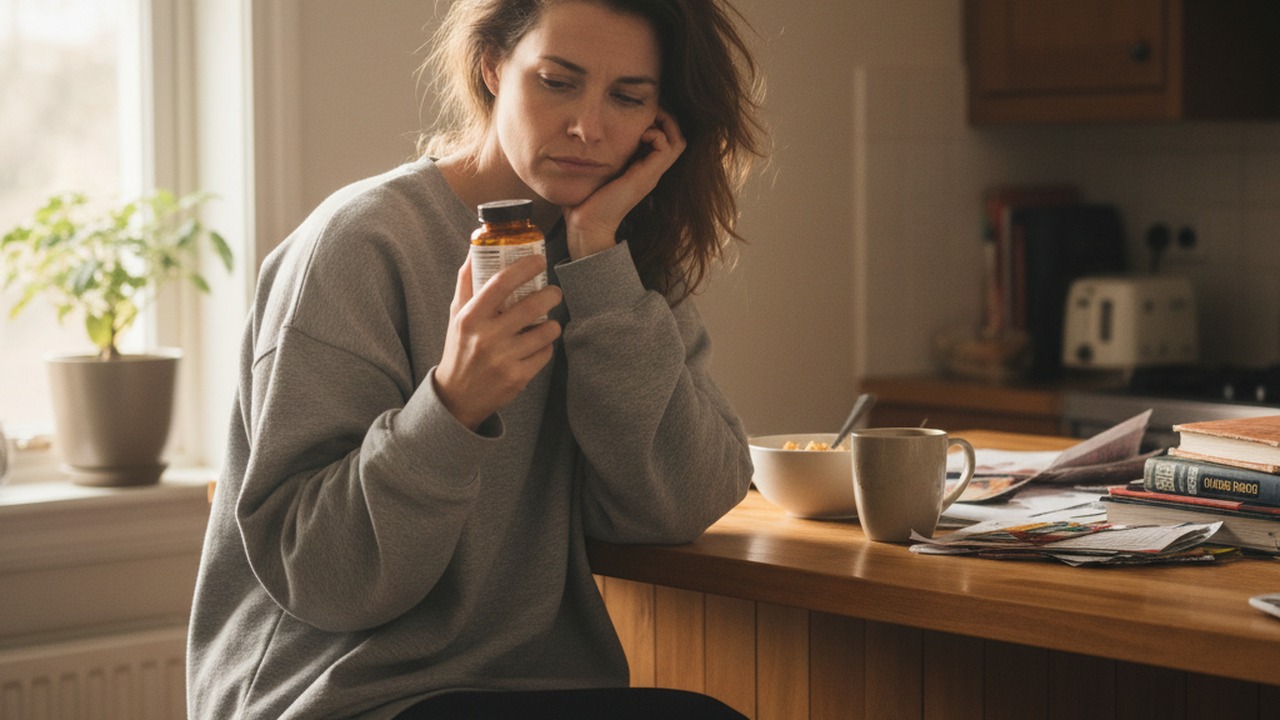
Ashwagandha searches spike every few months, and the pattern is consistent: people search for it when they are exhausted, wired, or both. Google Trends shows interest holding around 71 out of 100 this week, putting the herb well ahead of most other adaptogens on the market right now. The research behind it is more specific than the marketing suggests, and that specificity is exactly what determines whether it does anything for you.
What ashwagandha actually is
Withania somnifera, known as ashwagandha, is a shrub used in Ayurvedic medicine for centuries, and its root contains compounds called withanolides that are believed to drive most of its measured effects. Not all supplements use the same part of the plant or the same concentration of these compounds, which is a bigger deal than most labels let on.
Two standardized extracts dominate clinical research: KSM-66, a root-only extract with roughly 5% withanolides, and Sensoril, a root-and-leaf extract with a higher withanolide concentration but a different compound ratio. A bottle simply labeled “ashwagandha root powder,” with no standardization listed, is a different product than either of these, even though the label says the same plant name.
The cortisol research actually holds up
The most cited ashwagandha trial is a 2012 randomized, double-blind, placebo-controlled study in the Indian Journal of Psychological Medicine, led by researcher K. Chandrasekhar. Sixty-four adults with a history of chronic stress took either 300 milligrams of a high-concentration root extract twice daily, or a placebo, for 60 days.
The treatment group’s serum cortisol dropped by 27.9% on average, compared with a 7.9% drop in the placebo group. Perceived stress scores, measured on a standard psychological scale, fell by roughly 44% in the ashwagandha group versus 5.5% with placebo.
That is a meaningful effect size for a supplement, and smaller trials since have broadly replicated the direction of the finding. The dose used, 600 milligrams daily split into two doses, is worth remembering, because it shows up again in nearly every study that found a real effect.
Sleep improves, but mostly in people who need it
A 2019 randomized, placebo-controlled trial in Cureus, led by researcher Deepak Langade, gave 60 adults either 300 milligrams of root extract twice daily or a placebo for 10 weeks. Participants with diagnosed insomnia saw significantly better sleep-onset latency, total sleep time, and self-reported sleep quality compared with the placebo group.
Healthy participants without insomnia also improved, but the effect was noticeably smaller. That distinction tends to get lost in supplement marketing, which promises dramatic sleep benefits regardless of a person’s baseline sleep quality.
The anxiety data followed a similar pattern within the same trial: people who started with higher anxiety scores saw the largest improvements, while those with mild or no anxiety at baseline had little room to move.
The testosterone claim is real, but narrower than it sounds
A 2019 crossover trial in the American Journal of Men’s Health, led by researcher Adrian Lopresti, followed 57 overweight men aged 40 to 70 over 16 weeks. Men taking 600 milligrams of ashwagandha root extract daily saw testosterone rise by about 14.7% more than the placebo group, alongside modest improvements in self-reported vitality and quality of life.
This gets repackaged online as “ashwagandha boosts testosterone,” which overstates a study conducted specifically in aging, overweight men with likely below-optimal baseline levels. There is far less evidence it does anything measurable for testosterone in young, healthy men who are already training and eating well, since the trial pool doesn’t reflect that group.
Where most supplements on shelves fall short
Nearly every trial that found meaningful effects used 600 milligrams daily of a standardized root extract, typically split into two 300-milligram doses taken with food. Plenty of commercial products list a dose in that range on the front label, but many don’t disclose the withanolide percentage or confirm third-party testing anywhere on the packaging.
An unstandardized extract at the same milligram dose can contain a fraction of the active compounds used in the actual studies. Checking for a stated withanolide percentage, ideally 5% or higher, along with independent lab testing, is a more reliable filter than trusting the number on the front of the bottle.
Timing matters less than consistency. Most positive trials ran for eight weeks or longer before measuring results, so a week or two of use is unlikely to reproduce anything seen in the research, regardless of how well-formulated the product is.
The safety picture has gotten more complicated
Ashwagandha carries real contraindications that get less attention than its benefits. It can stimulate thyroid hormone production, which makes it risky for people with hyperthyroidism or Graves’ disease, and it is not recommended during pregnancy due to evidence of uterine-stimulating effects in animal studies.
Case reports of liver injury linked to ashwagandha use have also accumulated in the medical literature over the past several years, generally involving supplement use spanning several weeks to a few months. The injury pattern is uncommon and typically reversible after stopping the supplement, but it’s frequent enough that anyone with an existing liver condition should talk to a physician before starting.
People taking thyroid medication, sedatives, or immunosuppressants should also check for interactions, since ashwagandha can amplify the effects of all three rather than simply adding to them.
What this means in practice
The research on ashwagandha is unusually consistent for a supplement: a specific dose, taken over weeks rather than days, produces measurable changes in cortisol, sleep, and anxiety scores in people who start out stressed or sleep-deprived. It is not a stimulant-like quick fix, and the evidence doesn’t suggest much benefit for people who are already well-rested and low-stress to begin with.
The gap between the studied product and the store-shelf product is where most of the disappointment comes from. A standardized extract at the studied dose, taken consistently for at least eight weeks, is a reasonable test of whether it works for you specifically.
A random 500-milligram capsule with no withanolide percentage listed on the label is a different experiment entirely, and the research simply doesn’t speak to what that version will do.