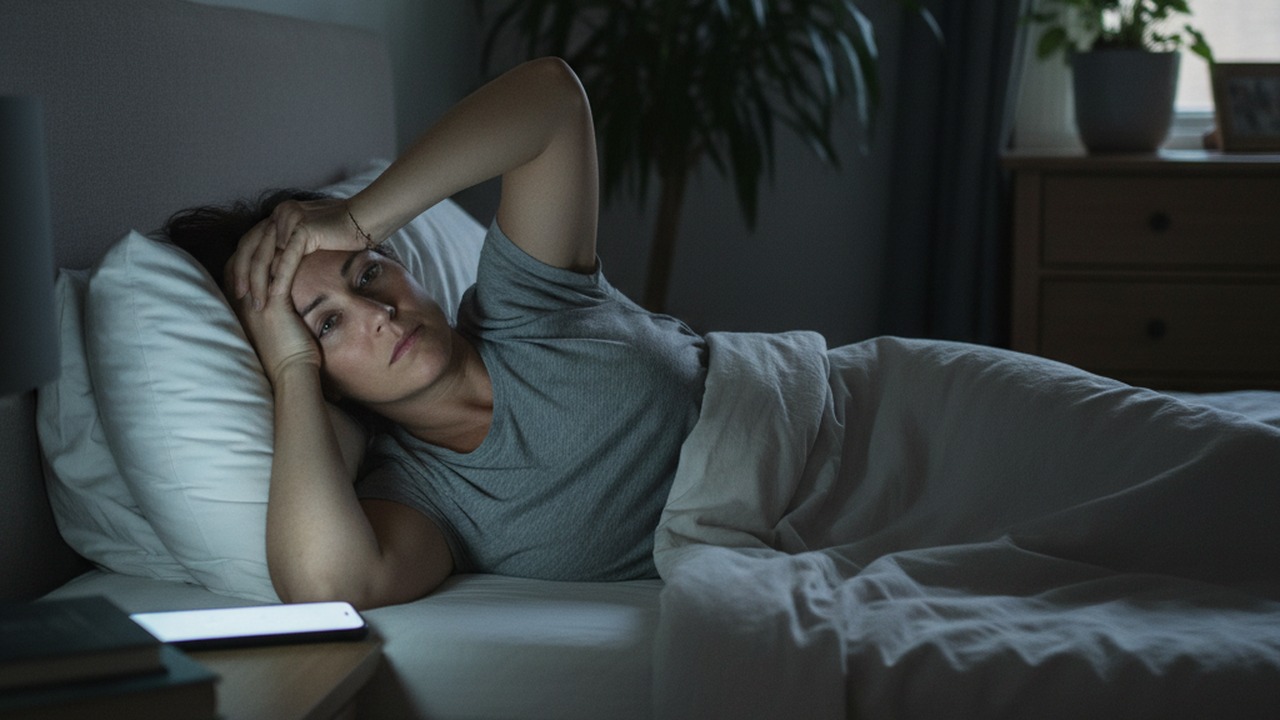
Most sleep supplements work by chasing the same target: knock the brain into drowsiness faster. A new randomized, double-blind, placebo-controlled trial published in the Journal of the International Society of Sports Nutrition took a different approach entirely. Instead of sedating participants into sleep, researchers tested whether lowering the body’s stress response during the day and evening could improve sleep on its own.
The distinction matters more than it sounds. Poor sleep and chronic stress feed each other in a loop: stress hormones delay sleep onset, and short or fragmented sleep raises stress hormones the next day.
Why stress and sleep share the same circuitry
The body’s stress response runs through the hypothalamic-pituitary-adrenal axis, the same hormonal system that governs cortisol release. Cortisol is supposed to be low at night and rise in the morning to help a person wake up.
In people under chronic psychological or physical stress, that rhythm flattens. Evening cortisol stays elevated, which keeps the nervous system in a low-grade alert state right when it should be winding down.
That is the mechanism the new trial targeted. Rather than adding a sedative compound, the multi-compound formula was designed to blunt the stress response itself, with sleep quality measured as a downstream outcome rather than a direct target.
What a multi-compound approach changes
Single-ingredient sleep aids tend to hit one receptor system. Melatonin shifts circadian timing.
Magnesium supports GABA signaling, the brain’s primary inhibitory neurotransmitter pathway, and low magnesium status has been associated with poorer sleep quality and higher markers of physiological stress in prior research. Compounds like L-theanine and certain adaptogens are typically included in these stacks for their effect on alpha brain wave activity and perceived calm rather than sedation.
Stacking several of these mechanisms in one formula is the premise behind the trial: if stress and sleep are physiologically linked, a formula that addresses both pathways simultaneously should outperform one that only addresses sleep directly. The double-blind, placebo-controlled design is what makes the result worth taking seriously rather than dismissing as another supplement marketing claim.
What this means if you already struggle to switch off at night
The practical takeaway is less about the specific formula and more about the framing. Someone who lies awake replaying the day’s stress, rather than someone who simply feels physically wired, may be a better candidate for a stress-targeted supplement than for a classic sedative.
That distinction is worth paying attention to before reaching for anything. A person whose main issue is circadian misalignment, like jet lag or shift work, is solving a different problem than someone whose cortisol never comes down from a stressful day.
Magnesium in particular has become one of the more evidence-backed single ingredients in this space, partly because magnesium insufficiency is common and partly because the mechanism, GABA support and HPA axis modulation, is well characterized. For readers already building a broader supplement routine, it is worth checking whether a methylated multivitamin is already covering baseline magnesium needs before adding a separate stress-and-sleep formula on top.
The caveats worth sitting with
One trial, even a well-designed one, does not settle the question of whether multi-compound stress formulas outperform single-ingredient sleep aids across the board. Sample sizes in supplement trials are typically modest, and self-reported sleep quality and perceived stress are softer endpoints than polysomnography or cortisol assays.
It is also unclear how much of the benefit came from any single compound in the stack versus the combination. Multi-ingredient trials are good at showing that a formula works as a whole; they are notoriously bad at isolating which ingredient is doing the heavy lifting.
That is a real limitation for anyone trying to reverse-engineer their own stack from the ingredient list. The honest reading of this kind of research is that it supports the stress-sleep link as a legitimate target, not that any particular commercial product is proven superior to the alternatives on the shelf next to it.
The bigger shift in how sleep supplements are being designed
What stands out is the design philosophy, not just the result. For years, the sleep supplement category has been dominated by products built around a single mechanism, usually melatonin or a sedating herb, measured against placebo for sleep latency and duration alone.
This trial is part of a smaller but growing body of research treating sleep as a symptom of a larger physiological state rather than an isolated switch to flip. That framing lines up with what sleep researchers have argued for years: sleep problems rarely exist in isolation from stress, and treating only the symptom tends to produce shallower, less durable improvements.
Whether multi-compound stress formulas become a standard category or stay a niche alongside melatonin and magnesium alone will depend on replication. But the question the trial asked, whether calming the stress response is a more direct route to better sleep than sedation itself, is the more interesting one for anyone who has ever lain awake feeling wired rather than simply unable to fall asleep.