Fatty liver disease now affects an estimated 32 percent of adults worldwide, and most of the drugs in development chase a single enzyme or receptor. A study published in the Journal of Ethnopharmacology took a different approach: it traced how a centuries-old Chinese herbal formula shuts down three connected steps in the disease process at once, rather than one isolated target.
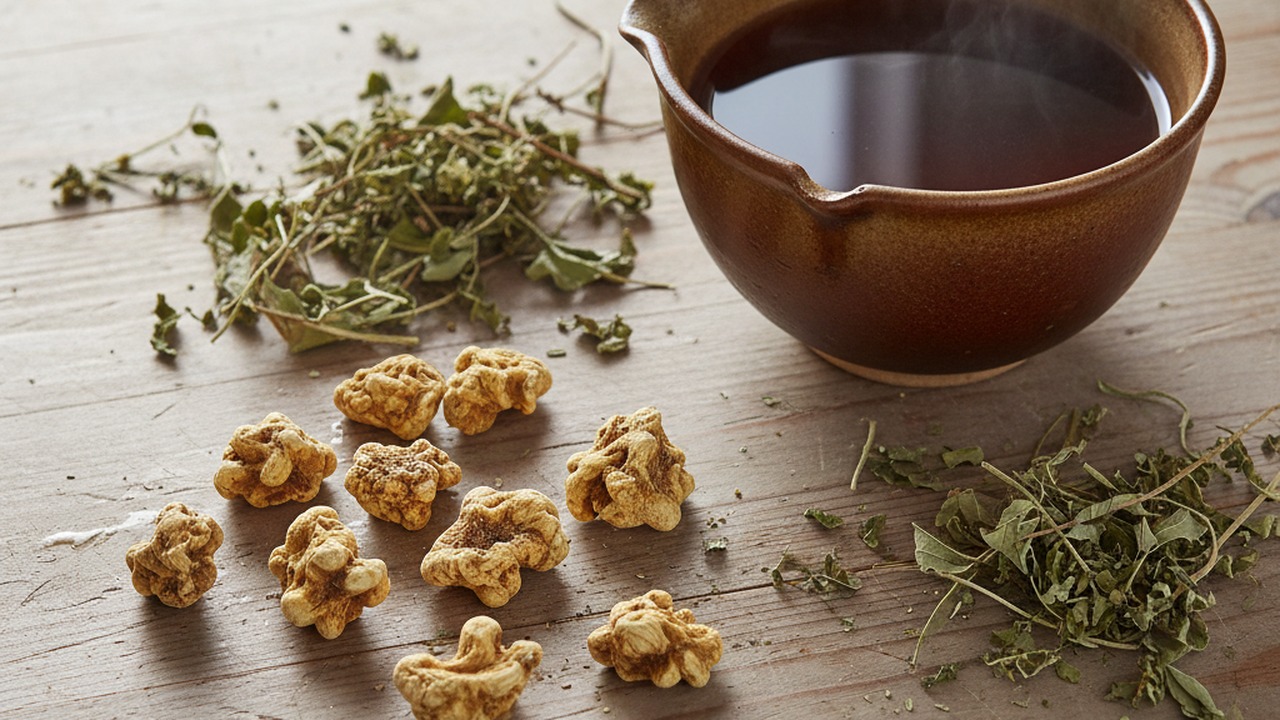
The formula is called Huanglian Wendan decoction, and its lead ingredient, Coptis chinensis, known in Chinese medicine as huanglian, is the same plant source scientists have mined for decades to isolate berberine. Researchers found that the full decoction suppressed liver inflammation and fat accumulation by disrupting a signaling relay known as the NF-κB/HDAC1/SREBP-1c axis, a pathway that has become a focal point in metabolic disease research.
A formula with a history of targeting the gut and liver
Huanglian Wendan decoction is not a single herb but a formula of roughly a dozen botanicals, built around Coptis chinensis for its bitter, heat-clearing properties alongside ingredients like Pinellia and bamboo shavings. In classical Chinese medicine it has been used for centuries to settle digestive upset and what practitioners described as phlegm-heat.
That language maps loosely onto what researchers now recognize as metabolic inflammation. It is part of why pharmacology labs keep returning to the formula: traditional indications for digestive and liver complaints often turn out to track real inflammatory and metabolic pathways once researchers go looking.
Why the liver gets stuck in a feedback loop
Non-alcoholic fatty liver disease rarely starts with fat. It starts with a low-grade inflammatory signal, often triggered by a diet high in refined carbohydrates and saturated fat, that activates a protein complex called NF-κB inside liver cells.
NF-κB functions as the cell’s emergency broadcast system. Once switched on, it does not just trigger inflammation directly, it also recruits HDAC1, an enzyme that reshapes how tightly DNA is wound around histone proteins, loosening the packaging around certain genes and making them easier to transcribe.
One of the genes that becomes more active under this epigenetic push is SREBP-1c, the master regulator of fat synthesis in liver cells, which switches on the enzymes that convert excess carbohydrate into stored triglyceride. The result is a self-sustaining loop: inflammation primes the machinery for fat production, and the resulting fat buildup then feeds back to sustain more inflammation, part of why fatty liver disease tends to progress rather than plateau once it takes hold.
What the study found
Using a combination of cell culture and animal models of diet-induced fatty liver, the research team measured markers at each step of the pathway after treatment with Huanglian Wendan decoction. Liver tissue from treated animals showed reduced NF-κB activation, measurably lower HDAC1 activity, and a corresponding drop in SREBP-1c expression compared with untreated controls on the same diet.
That drop in SREBP-1c mattered downstream. Liver cells produced less triglyceride and accumulated less visible fat on tissue staining, while markers of inflammatory cytokine release, the kind associated with the more dangerous, fibrosis-prone stage of fatty liver disease, fell alongside it.
The significance is less about any single number and more about the order of operations the data suggest. Rather than only lowering fat synthesis directly, the way some existing lipid-lowering compounds do, the formula appears to intervene further upstream, at the inflammatory trigger that switches the fat-synthesis gene on in the first place.
Hitting the pathway at that earlier point is the part drug developers find most interesting. It suggests a single intervention could blunt inflammation and fat storage simultaneously, instead of requiring two separate drugs for two separate problems.
Where berberine fits in
Huanglian Wendan decoction is a multi-herb formula, not a single compound, but its main active ingredient overlaps heavily with existing berberine research. Berberine has already been studied for its effects on blood glucose control, lipid metabolism, and gut bacteria composition, and several of those studies point to activation of AMPK, a cellular energy sensor, as a key mechanism.
This newer research adds an epigenetic layer to that picture that most berberine studies have not addressed. By implicating HDAC1, an enzyme family already targeted by approved cancer drugs for its role in controlling which genes get expressed, the study suggests berberine-containing formulas may influence the liver at the level of gene regulation itself, not only by speeding up or slowing down existing enzymes.
That distinction matters for anyone following the berberine supplement trend that has grown alongside interest in metabolic health. A compound that resets an inflammatory signaling loop upstream operates differently, and potentially more durably, than one that simply blocks a single metabolic enzyme further downstream.
What this does not mean yet
This is preclinical research, and that context matters. The decoction was tested in cell culture and animal models, not in people with diagnosed fatty liver disease, and traditional Chinese herbal formulas are not standardized the way pharmaceutical drugs are.
Dose, preparation method, growing conditions, and the exact ratio of herbs in the formula all affect which compounds actually reach the liver and in what concentration. None of that has been worked out for human use, and self-dosing with raw Coptis chinensis or over-the-counter berberine supplements is not a substitute for a tested, regulated formulation studied in human trials.
What the study does offer is a clearer map of a mechanism that drug developers already care about independently of this formula. NF-κB, HDAC enzymes, and SREBP-1c are each independently drugged targets in other diseases, from cancer to cardiovascular disease, and finding a single natural compound class that intersects all three narrows the search for a fatty liver treatment that addresses inflammation and fat storage together.
The bigger picture for liver health
Fatty liver disease has quietly outpaced viral hepatitis as the leading cause of chronic liver disease in much of the developed world. It frequently develops silently alongside insulin resistance and visceral fat gain for years before diagnosis.
Diet and exercise remain the only interventions with strong human trial evidence behind them, but the hunt for an effective adjunct therapy has intensified as the condition’s global prevalence keeps climbing. This single study will not change clinical practice on its own, and it will likely be years before any derivative compound reaches a human trial.
It does, however, reinforce a pattern showing up repeatedly across metabolic disease research. The compounds worth paying the closest attention to are often the ones that interrupt a feedback loop at its origin, rather than treating a single symptom downstream of it.